

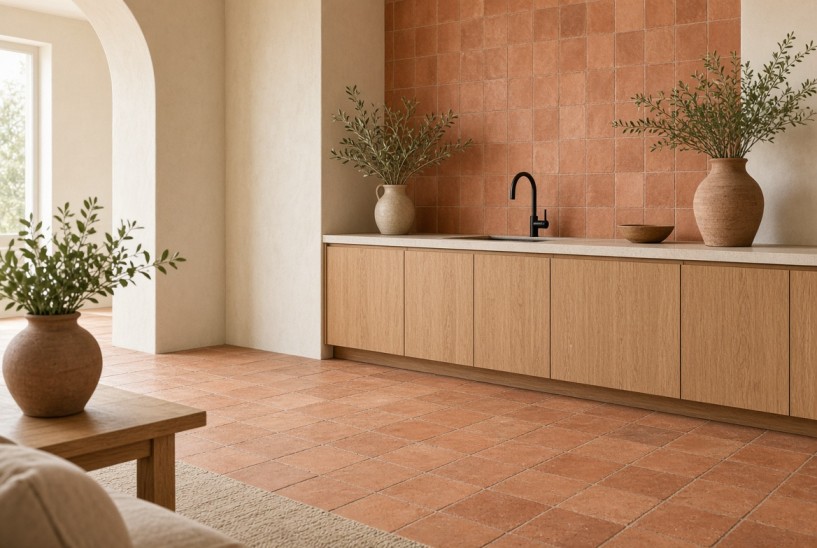
Stone has been one of the most trusted natural building materials for centuries. It comes from rocks found in the earth’s crust and is made up of minerals with different compositions and structures. After quarrying, workers can turn it into blocks, slabs, lintels, flags, aggregates, and other useful forms. Builders use stone for houses, public buildings, bridges, roads, dams, harbours, railway ballast, and concrete work because it can offer strength, durability, and natural beauty.
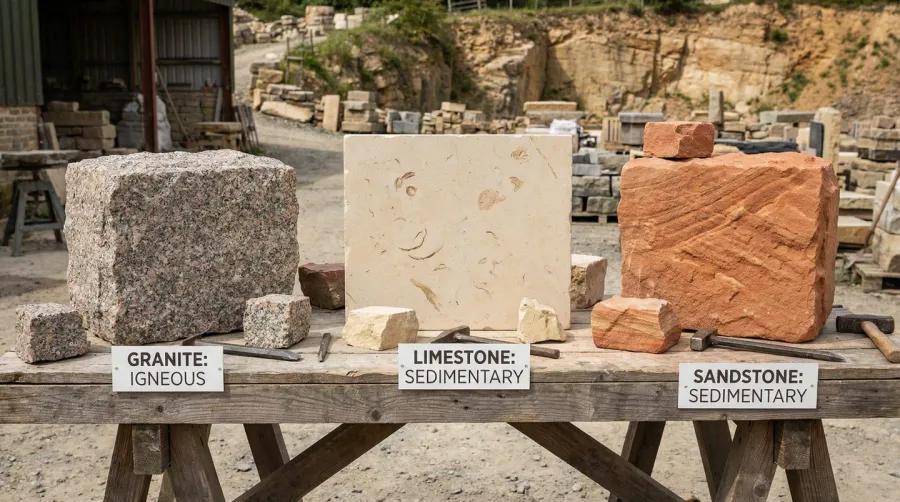
Table of Contents
Types of Building Materials
Geologically, rocks fall into three main groups: igneous, sedimentary, and metamorphic. Igneous rocks forms when molten material cools. Rapid cooling at the surface can produce basalt or trap, while slow cooling underground forms crystalline granite. Sedimentary rocks develops when weathered particles, clay, and organic matter settle in rivers, lakes, or seas and become compacted. Limestone and sandstone are common examples. Metamorphic rocks forms when existing rocks change under intense heat and pressure. Marble can develop from limestone, while slate can transform into gneiss under suitable conditions.
Physical classification divides it into stratified and unstratified types. Stratified varieties have visible layers and can often be separated into slabs; limestone, slate, and sandstone are examples. Unstratified varieties lack clear bedding planes and include granite, trap, and marble.
Chemical classification places rocks into silicious, argillaceous, and calcareous groups. Silicious rock contains a high proportion of silica and is usually hard and durable. Argillaceous varieties contain clay or alumina, while calcareous types contain calcium carbonate or lime. Limestone, marble, and dolomite are common calcareous examples.
Qualities of Good Building
A suitable building stone should have an attractive appearance, adequate crushing strength, good hardness, toughness, durability, and resistance to weathering. Low harmful porosity is also important because excessive pores can allow water and damaging substances to penetrate the material. The correct choice depends on the intended use, climate, exposure, and required finish.
Deterioration and Preservation
Rain, wind, temperature changes, repeated wetting and drying, frost, vegetation, and polluted air can gradually damage stone surfaces. Preservation methods include filling pores and applying suitable protective treatments. Traditional preservatives mentioned in building-material studies include coal tar, linseed oil, paint, and alum-and-soap solutions. Proper maintenance can extend service life and protect appearance.
Testing of Stone
Engineers and builders test it before using it in important construction. Common tests include Smith’s test, freezing and thawing, frost action, acid testing, water absorption, microscopic examination, impact, attrition, crushing, crystallization, and hardness tests. These methods help determine strength, durability, weather resistance, and water absorption.
Quarrying and Dressing
Quarrying removes material from a natural rock mass. Before opening a quarry, professionals consider material quality and quantity, transportation, labour, equipment, drainage, and site conditions. Common extraction methods include digging, heating, wedging, and blasting. In wedging, steel wedges are placed in prepared holes and hammered until the rock cracks along a planned line. Blasting involves boring, charging, tamping, and firing.
After extraction, workers dress stone to achieve the required shape, size, and surface. Dressing improves appearance, masonry fitting, transportation, and handling. Finishes may include pitched-faced, hammer-faced, rock-faced, chisel-faced, rough-tooled, punched, close-picked, and fine-tooled surfaces.
Common Building Stones
Granite is composed mainly of quartz, feldspar, and mica. Its strength, durability, and ability to take a polish make it useful for structural, paving, and ornamental work. Basalt or trap is hard and tough and is commonly used for paving and aggregates. Sandstone is useful for masonry and decorative applications, while limestone is valued for its workable nature and natural appearance. Marble is widely chosen where a polished and elegant finish is desired, and slate is particularly useful where thin, layered pieces are required.
In conclusion, It remains a valuable construction material because it combines natural character with practical performance. Selecting the right variety, testing it properly, quarrying it carefully, and protecting it from environmental damage can help ensure long-lasting results.
Transforming Spaces into Timeless Experiences
Bring your vision to life with Interior Dreams. We specialize in innovative interior design, space planning, 3D visualization, and custom solutions that blend functionality, comfort, and elegance to create spaces you’ll love.
- Collaborate with Interior Dreams
- Showcase your projects.
- Experience the world of interior architecture.

Leave a Reply