

Introduction
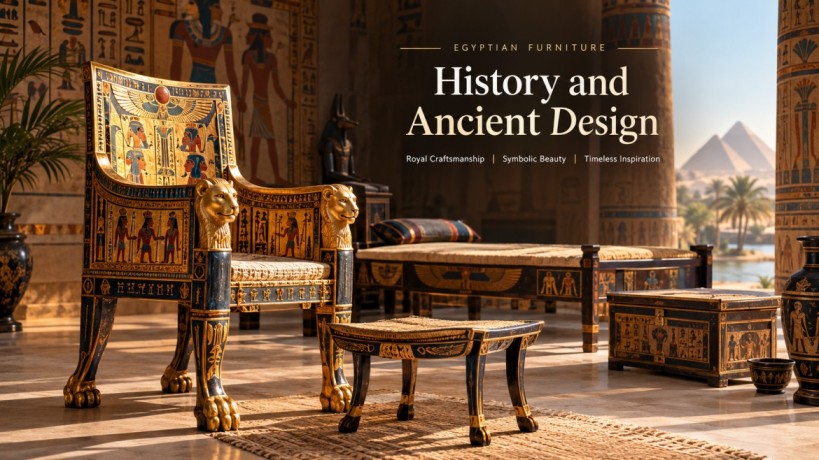
Egyptian furniture represents one of the most fascinating chapters in the history of interior design. Known for its artistic craftsmanship, natural materials, symbolic decorations, and elegant forms, Egyptian furniture reflects the lifestyle, beliefs, and social hierarchy of ancient Egyptian civilization. From royal thrones and decorated beds to wooden stools and storage chests, these furnishings combined practical use with cultural and artistic significance.
Today, Egyptian furniture continues to inspire interior designers through its luxurious appearance, geometric patterns, rich colors, and timeless decorative elements.
Table of Contents
The History of Egyptian Furniture
The history of Egyptian furniture dates back thousands of years, particularly to the early dynastic period, around 3100 BCE. As ancient Egyptian civilization developed along the Nile River, furniture became an important part of homes, palaces, temples, and tombs.
Furniture varied according to wealth and social status. Ordinary households generally used simple stools, low tables, and practical wooden furnishings, while wealthy families and royalty owned elaborately decorated chairs, beds, chests, and ceremonial thrones.
Archaeological discoveries in ancient Egyptian tombs have provided valuable information about furniture-making techniques and design traditions. One of the most famous examples is the collection of objects discovered in the tomb of Pharaoh Tutankhamun in 1922, including his celebrated golden throne. These objects reveal the remarkable skill of Egyptian artisans and the importance of furniture in royal life and funerary traditions.
Materials Used in Egyptian Furniture
Materials played an important role in the development of Egyptian furniture. Craftspeople selected materials according to availability, durability, function, and the importance of the object.
- Wood: Native woods, including acacia, sycamore fig, and tamarisk, were used for many everyday furnishings. Imported woods such as cedar were valued for high-status objects.
- Gold: Gold was used for decorative surfaces and royal furniture to represent wealth, prestige, and divine associations.
- Ivory and bone: These materials were used for decorative inlays and intricate details.
- Leather and woven materials: These were used for certain seat surfaces, supports, and practical furnishings.
- Stone: Stone was more common in architectural elements and some tables or specialized objects than in ordinary movable furniture.
Artisans also used painting, carving, gilding, and inlay techniques to enhance the appearance of furniture.
Main Characteristics of Furniture
Egyptian furniture is recognized for its distinctive combination of function, craftsmanship, and symbolism.
1. Royal and luxurious appearance
Furniture belonging to pharaohs and wealthy families often featured gold-colored finishes, precious materials, and elaborate decoration. These features communicated authority, prosperity, and high social standing.
2. Animal-inspired designs
Lion-shaped legs, animal feet, and other symbolic forms appeared on selected chairs, beds, and ceremonial objects. These designs gave furniture a powerful and distinctive character.
3. Geometric patterns and hieroglyphics
Egyptian furniture sometimes incorporated geometric borders, painted scenes, hieroglyphic inscriptions, and religious symbols. These decorations could express identity, protection, status, or religious beliefs.
4. Functional construction
Despite their decorative richness, many Egyptian furnishings were designed for everyday use. Stools, beds, chairs, and storage chests served practical purposes in domestic and royal environments.
Types of Ancient Egyptian Furniture
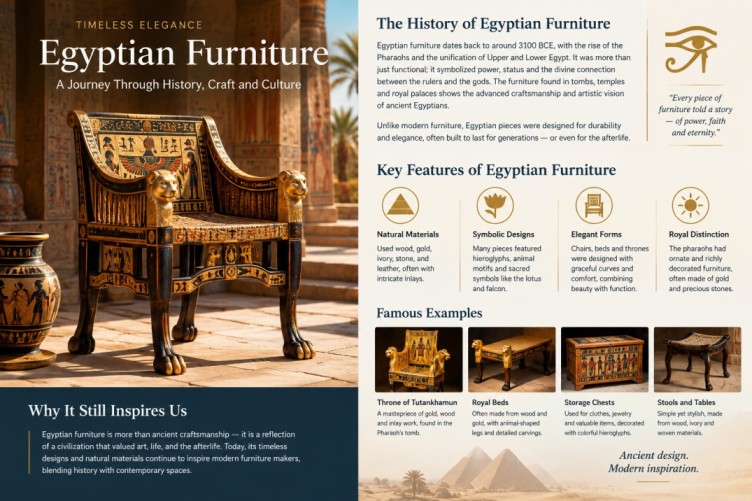
The major types of Egyptian furniture included chairs, stools, beds, tables, and storage chests. Chairs ranged from simple wooden forms to richly decorated royal seats. Stools were practical and widely used, while beds could feature wooden frames and woven or leather sleeping surfaces.
Storage chests protected clothing, jewelry, cosmetics, and other personal possessions. Tables supported daily activities, meals, and the placement of household objects. Together, these furnishings demonstrate how ancient Egyptians organized their living spaces according to function, comfort, and social customs.
The Influence of Egyptian Furniture on Modern Interior Design
Egyptian furniture continues to influence contemporary interior design, particularly in luxury residential spaces, hotels, themed interiors, and decorative furniture collections.
Modern designers often reinterpret Egyptian elements through gold accents, dark wood finishes, symmetrical arrangements, sculptural furniture legs, and geometric motifs. Instead of copying ancient furniture exactly, designers adapt its visual character to contemporary needs.
For example, a modern living room might combine a dark wooden console, gold decorative accessories, symmetrical wall art, and neutral upholstery to create a subtle Egyptian-inspired atmosphere.
Designers should use these elements thoughtfully to avoid overcrowding a space. A balanced combination of materials, lighting, texture, and decoration can preserve the elegance of Egyptian design while maintaining modern functionality.
Conclusion
Egyptian furniture is more than a collection of ancient household objects. It reflects a civilization that valued craftsmanship, artistic expression, social identity, and religious symbolism. From simple stools to elaborate royal thrones, its designs demonstrate the relationship between furniture, culture, and architecture.
Understanding the history of Egyptian furniture helps modern interior designers explore historical styles and incorporate traditional elements into contemporary spaces. Its use of natural materials, distinctive ornamentation, and carefully crafted forms continues to offer inspiration for timeless interior design.

Leave a Reply